Hotel Management System
Before
Even one hotel holds several inventories: the desk that answers the phone, the channel that sells the room online, and the night shift that hands over the key. If those three do not talk, a room is sold twice. In a busy season that is not rare. The guest arrives with a voucher and the front desk says the hotel is full.
The bill reaches accounting late. The night cashier writes figures on a slip, someone types them into the ledger in the morning, and the minibar or the transfer difference waits until month end. In a hotel group this repeats at every property, and the rate and tax of one property are not the rate and tax of the next.
What was built
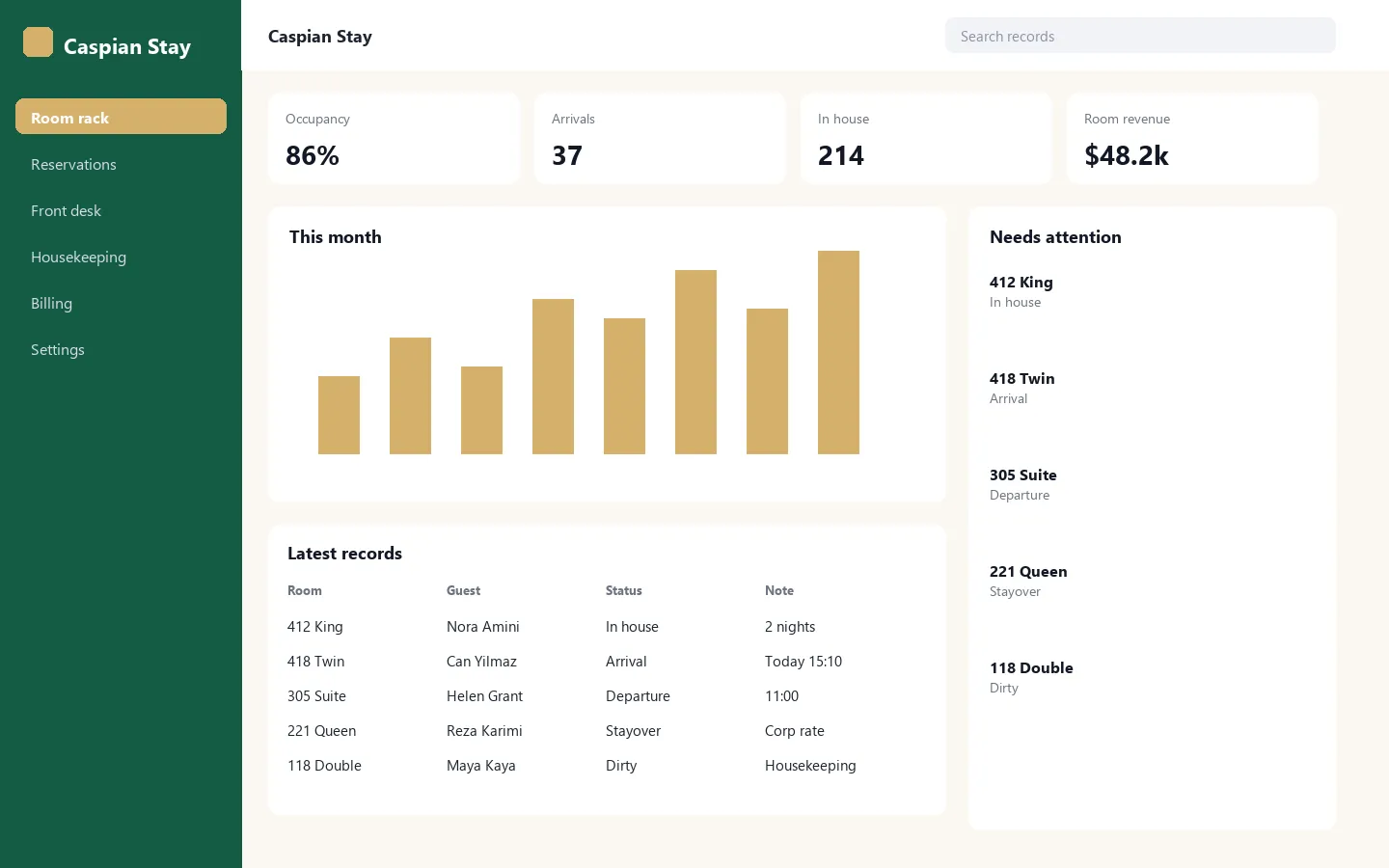
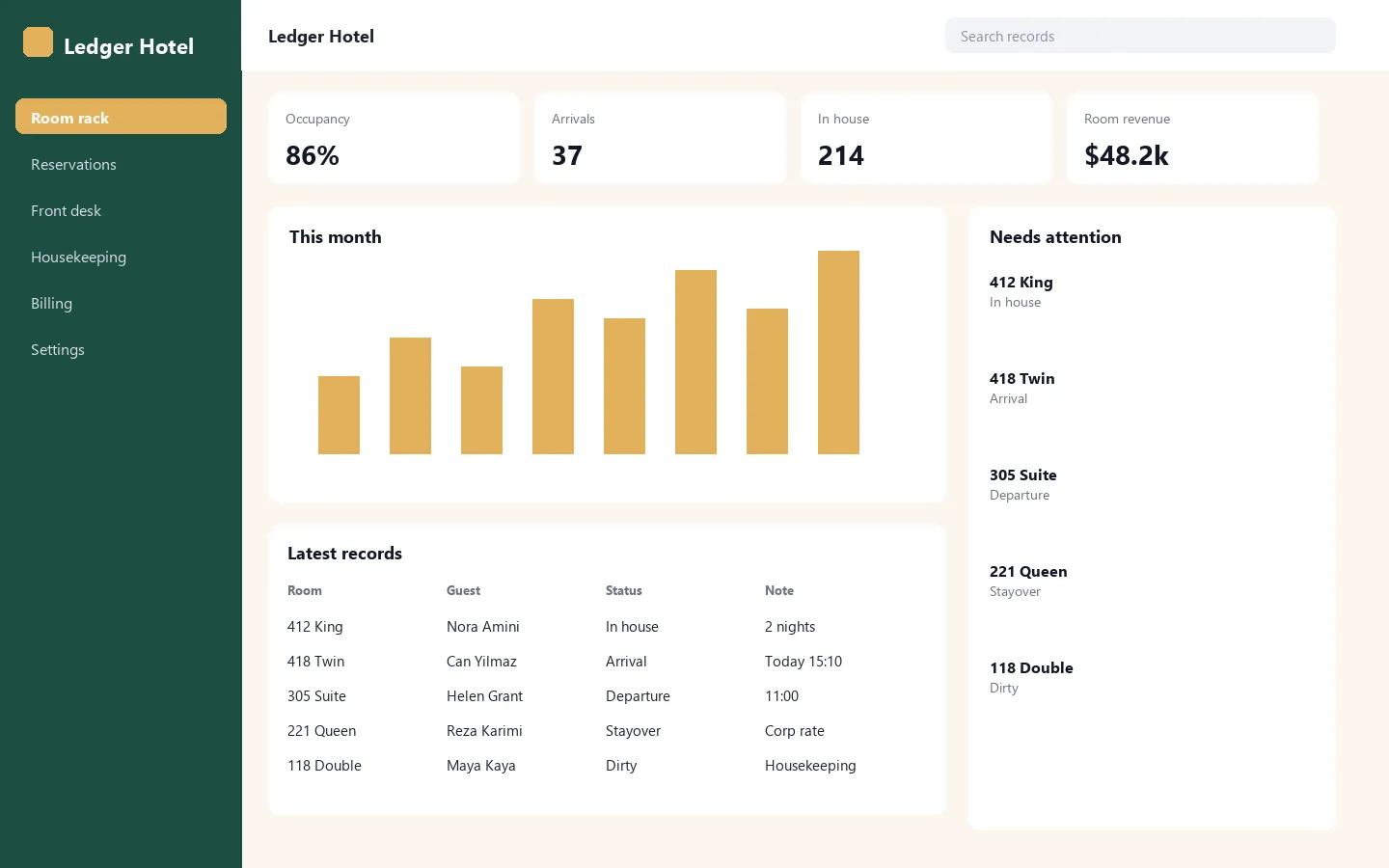
The hotel system ties the room rack, phone and online reservations, the front desk, housekeeping, and the guest folio to one inventory. A room is free or it is not. The channel sees the same lock the night shift sees. Housekeeping marks a room dirty, in progress, or ready, and the desk cannot check a guest into a room that is not ready.
For a group, each property keeps its own rate, tax, and report, while head office reads occupancy and revenue together. The accounting voucher comes out of check-in, not from retyping the morning slip. The channel connection sits on the same room rack, so a third inventory is never created.
A working day
At noon an online booking takes room 418. The rack removes that room at the same moment. The evening shift finds the guest by the booking number and does not call reservations. After the previous departure, housekeeping marks the room dirty, and check-in stays closed until the room is ready.
At night the cashier closes the stay. The minibar and the transfer are on that folio, and the voucher posts to the property's books. The shift manager reads occupancy: arrivals, departures, and rooms out of order for repair. Nobody retypes the slip in the morning.
The result
Peak-season overbooking stops, because there is no second inventory. The guest with a voucher reaches a room that is actually free. The night audit matches accounting, and the minibar difference does not wait for month end.
A hotel group still runs each property on its own. The method is the same. Head office does not have to call three front-office managers to learn the occupancy.
Services
Related work